
Two of my most recent poems, “I Would Be an Ally to You” and “Tell Me Something About You No One Else Knows,” were recently published by Stone Poetry Quarterly. Check ’em out.
Post Category → Blog
Q&A on Carve Magazine
My poem “This Is Not a Story About Me” was just published in the Summer issue of Carve, and as part of the process, I responded to a little Q&A from one of the editors. This is pretty much my first “interview” as a poet, and it took quite a bit of thought to figure out answers to these questions. Anyway, check it out and enjoy.
Talking with Dan Wiencek
My first collection, “Routes Between Raindrops,” is available for purchase
I am thrilled, chuffed and delighted to announce the publication of my first collection of poems, Routes Between Raindrops. It’s available now from First Matter Press and Amazon.
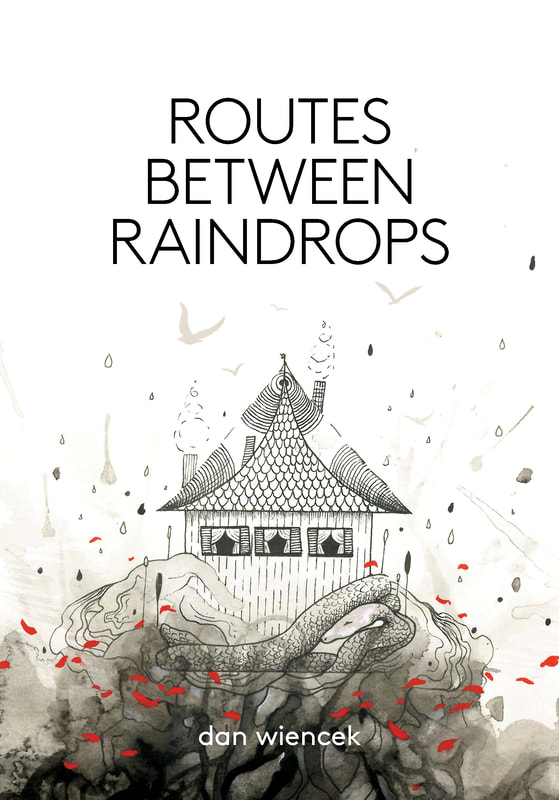
The poems in this book stem mostly from 2016–19, when I joined the Eastside Poetry Workshop here in Portland. A few pieces predate it; one goes back to 2006 or so. The cover art was created by Aleksandra Apocalisse specifically for the book (she was kind enough to add some extra birds for me).
Here is some advance praise, as they call it:
“In ROUTES BETWEEN RAINDROPS, Dan Wiencek searches through a feast of images, what was, what is, and what could have been, as well as what might yet be, as they shift back and forth between the common and the uncanny, the probable and the impossible alike. Wiencek calls us to recognize ourselves, through shifting tones and approaches, from the recognizable, such as baking bread, to the absurd, as in coming home to find a walrus in a pile of laundry or lampshades turning into birds, and all points in between. It’s a marvelously dislocated tour that we exist in, and co-create, as Wiencek writes, ‘Sky throws itself in everyone’s / faces, now you’re me, it says.’”
JOHN GALLAHER, AUTHOR OF IN A LANDSCAPE
“With his slantwise existential wit and his sleight-of-hand association and indirection, Dan Wiencek takes us on ‘a hypothetical guided tour’ through various surreal landscapes all the way to the present moment where you can ‘realize you’re looking at a star,/the mirage that dissolves at the eye’s touch.’”
CLAIRE BATEMAN, AUTHOR OF CORONOLOGY
“I love the way Wiencek perceives the world. Time and again, the speaker in his poems looks out to find it damaged but irresistible, like a friend endlessly returning with some new self-made malady, asking you to love them anyway. And Wiencek does. With a wry, self-aware, and tender humor— the poems put me in mind at times of Tony Hoagland’s— the writer rescues moments from the blur and frames them beautifully: an empty lot “[stares] up at the sun like a vast / gravel eye,”; a hand grasps empty air like “a furnace / starved of flame.”
GRADY CHAMBERS, AUTHOR OF NORTH AMERICAN STADIUMS
Two More Poems
I forgot to post this earlier in the year, but the April 2017 issue of The Blotter featured two of my poems, “Demonstration” and “Walking the Path.” The online version can be read at this link; you can find my work on pages 12-13.
New Poem, Quick Update [Updated]
As promised in the previous post, a new poem is out. Read “Weighing the Stars” online at Milk Journal.
Update, November 2017: Milk Journal seems to be kaput. Rather than allow the poem to disappear into the memory hole, I am reproducing it here. Pardon the .jpg; advanced online typography is not really my forte.

Roses Are Red, Violets Are Blue: It’s Time for Poet’s Corner
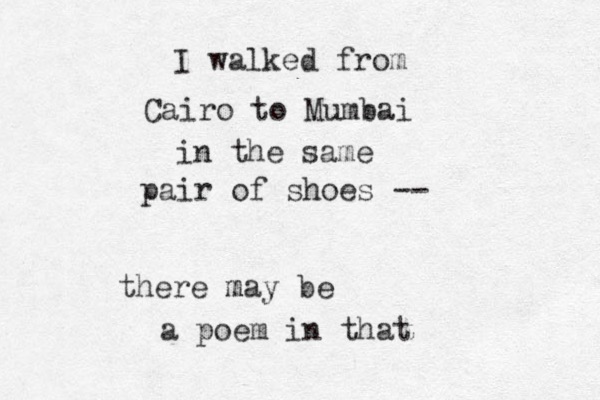
Hello dear readers, you few, you happy few, you.
The site has been moribund for a few reasons, not least of which is it just wasn’t working. I don’t know how it first happened nor how, after some random clicking behind the scenes, it suddenly righted itself. However it came about, all posts on this blog are now accessible again, which makes updating it seem tangentially more worthwhile.
Early this year, while trying to write a YA novel that seemed to refuse every opportunity to be written, I found myself revisiting some old poems stashed in an obscure corner of my hard drive. I thought they weren’t so bad, and that it might be fun to write a few more. Fast-forward to roughly now, I have been firmly bitten by the poetry bug and so the energy that might have gone into pithy blog posts has mostly gone in that direction.
Will I be publishing poems here? Probably not. I’d rather let a journal (with, you know, an actual audience) have first shot at anything I produce. And speaking along those lines, my first accepted piece can be reviewed online in the e-zine Crack the Spine. My poem “The Air of the Room” can be read for free in Issue 195.
In addition, Hypertrophic Literary published two pieces, “I Love This Woman” and “New Red,” in their Fall 2016 issue. You’ll need to shell out for this. Totally worth it though.
And there we are. I have a couple more pieces forthcoming but I’ll post more about that when I have something to link to.