You Say Goodbye, and I Say Hello: Steve Jobs Resigns

If you’re an Apple fan, an Apple user or just a technology enthusiast in general, there is only one story today: Steve Jobs is stepping down as CEO of Apple.

This is not to say he is leaving Apple. He is continuing on as Chairman of the Board, so it seems reasonable to assume he will still exert considerable direct influence on Apple’s products and overall direction. That face-saving news probably helped insulate Apple’s stock from the bad news. As of this writing, it has taken a five-percent hit, much less than the cataclysm many predicted would befall Apple should Jobs have died, quit or otherwise left the company abruptly.

Apart from sadness and a vague sense of unease or disquiet, I have these thoughts on hearing this news.

Whatever health issues Jobs has been dealing with, he has not been able to overcome them. Jobs must have reached a point where he and his doctors realized his recovery would make no more significant progress. It is possible (and I certainly hope) that Jobs has many years ahead of him in which to contribute to Apple and to enjoy life with his family and friends. However, it is just as possible — and knowing Jobs’ concern for his privacy, not at all unlikely — that there may be more bad news about Steve Jobs ahead, and that it will come sooner than anyone wants to accept. I take no pleasure in thinking that. But I do think it.

In a sense, we are about to see the ultimate test of Jobs as a businessman and leader. How well has he inculcated his values and expectations into Apple’s culture? How well, in other words, has he enabled it to continue as though he were still there? The answer to this question will not be apparent for some time; Jobs will, as noted, continue to be involved with Apple, and it will take months or even years for the efforts he has overseen to come to fruition. That will not, alas, stop the tech pundits from clucking over Apple’s “loss of vision” at the first post-Jobs bump in the road to come along. For example, if the iPhone 4’s “Antenna-gate” issue had happened at a post-Jobs Apple, no one would skip a beat before denouncing the scandal as the inevitable result of Apple adrift in the leadership vacuum left by its departed visionary: “This would never have happened if Steve had been there.” There’s going to be a lot of bullshit like this in the months ahead, I’m afraid.

But it is true that, at some distant point, people will look at Apple and have to decide, as well as they can, whether the company they see is truly living up to its founder’s standards, or whether it shows the first signs of an inevitable decline. Apple could easily remain unassailable with no input at all from Jobs for at least three years, and probably closer to five. By then, the tech landscape may have shifted sufficiently to allow a smaller, faster competitor to undermine Apple’s dominance or to establish a new computing paradigm ahead of it. This is going to happen eventually; it’s just a matter of when. The only real question is: will it happen sufficiently far in the future that no one can reasonably blame it on Jobs’ absence? Indeed, could Apple remain dominant for so long that Jobs himself one day becomes a hazily remembered, almost mythic figure like Henry Ford, with no direct associations with any of Apple’s then-current products?

I think it could happen. If it does, that will be the true confirmation of Steve Jobs’ genius. He would not have merely started Apple. He would not have merely rebuilt it from a teetering computer company into the world’s most valuable technology company, capable of redefining entire markets at a stroke. He would have given it a soul, and not just a soul but his soul — the one thing even some of his greatest admirers were convinced he could not do. He would have achieved a kind of immortality: a cluster of dedicated people who absorbed his ways of thinking and distilled them into an essence that can be taught and passed on after he was gone. If he succeeds in this, then there is no telling how long Apple could remain in its present dominant position. Jobs came back to Apple 15 years ago. What could Apple be in another 15 years? It could come back down to earth, become just another successful purveyor of computers, gadgets and lifestyle accessories. Or it could be something that no one today can see, an integral part of industries we haven’t yet imagined. We might even one day call it the most powerful and innovative company that has ever been — greater than U.S. Steel, greater than Ford, greater than AT&T or Microsoft — a company so ingrained in our lives that it literally has no precedent.

Knowing what little I do about Steve Jobs, I am guessing that is the legacy he strives for. Will he succeed? I wouldn’t bet against him. How amazing it is to think that for all Jobs has accomplished, today really only marks a new beginning.

Broken Into

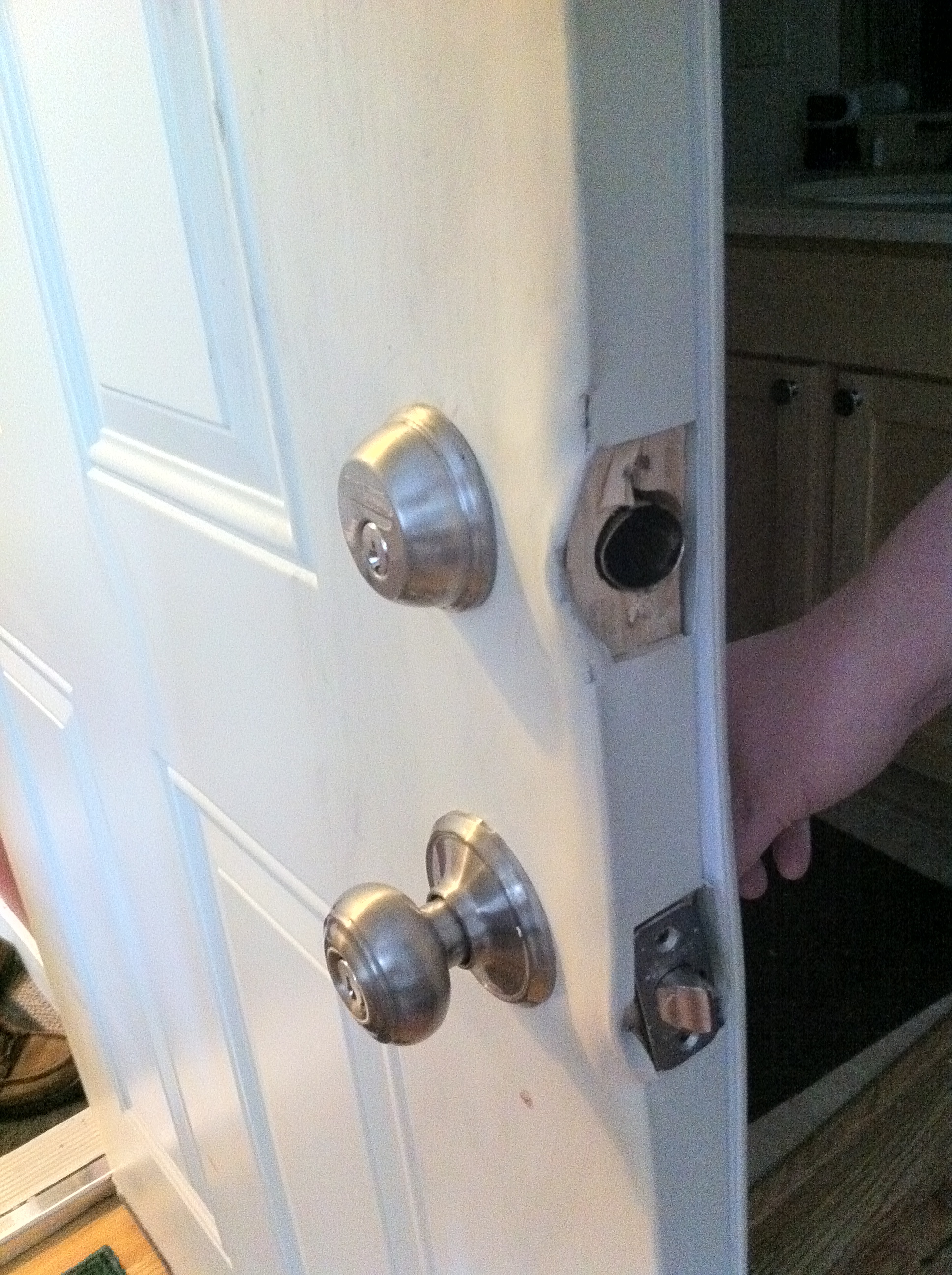
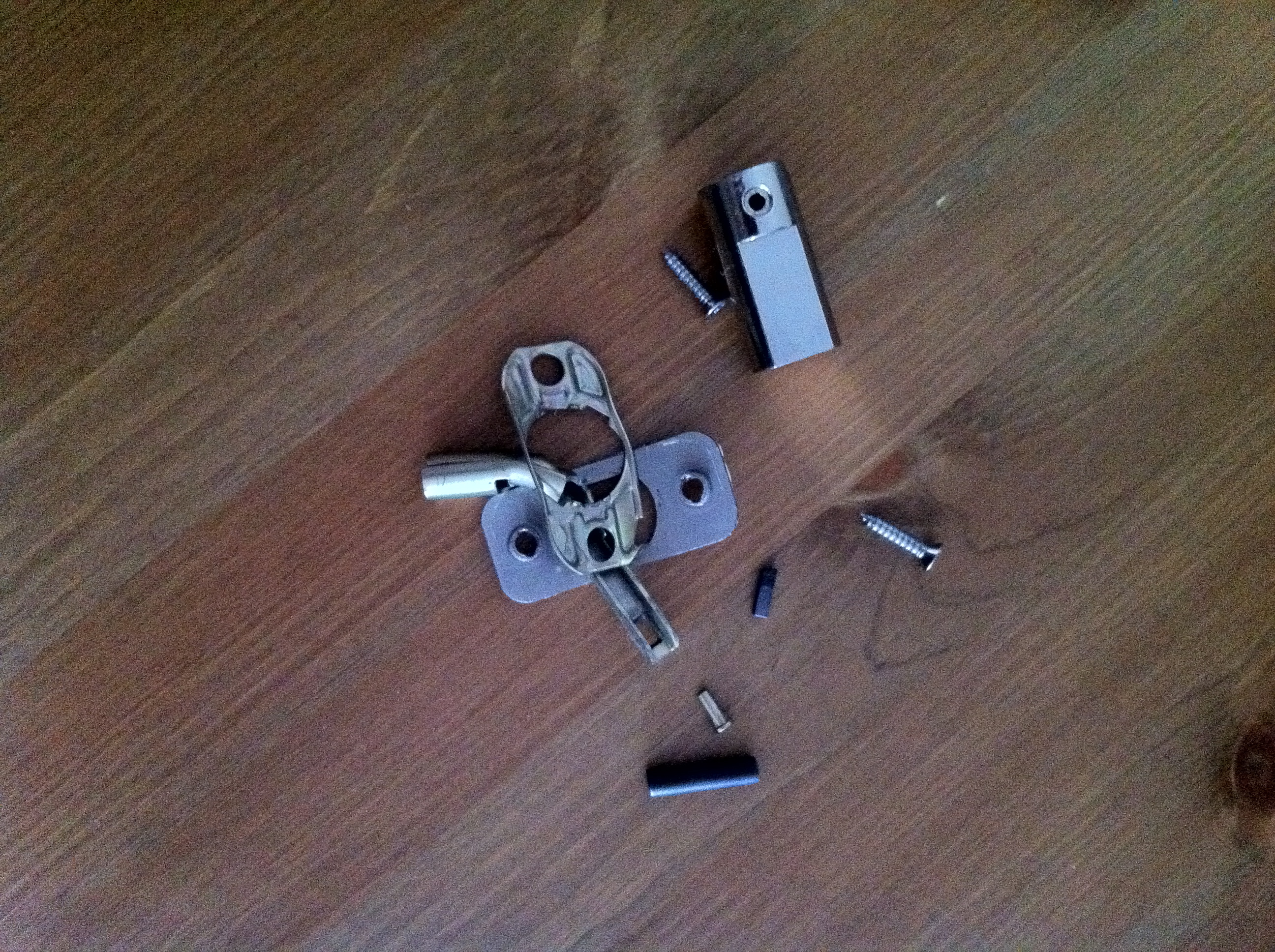
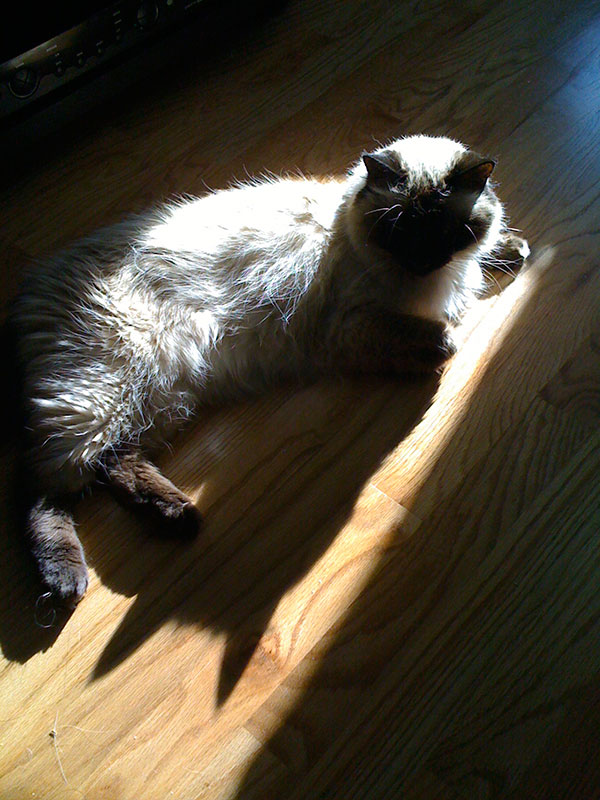
Our apartment was broken into last weekend. We arrived home from a weekend away to find our door forced open. Pushing it open, the first thing I noticed were the pieces of the lock on the floor, followed by the wires trailing from our TV stand, to which our Blu-ray DVD player had once been attached.

There is a complicated flood of emotions that arises in this moment. The first was blind fear: was the cat all right? (She was.) There is helplessness, a kind of grief, and in my case at least, a deep, sour rage. I couldn’t keep still, pacing relentlessly back and forth waiting for the police to arrive, and after them, the evidence technician. I prowled our rooms again and again, spotting what was missing, trying to notice everything that had changed. The DVD player was definitely gone. My wife’s laptop bag was rifled, the computer missing. The jewelry dish on the dresser was empty; what was in it again? Her sapphire engagement ring. Maybe her antique watch. Was that bag sitting on the bed when we left? Did I leave that drawer open? “What about your camera?” my wife asked. Checked the windowsill in the office where the camera bag was. Gone.

The initial shock wore off, after a night or two. Our broken door was replaced and fortified with a piercing battery-powered alarm. I called my insurance company and put the wheels in motion to have our stuff replaced, inasmuch as it can be. (If you rent and don’t have insurance, stop reading this and call your agent now.) What remains is the sense of violation — I try not to imagine the burglar actually walking through our apartment, sizing up our possessions for their pawn value, perhaps glancing at the cat regarding him quizzically from her carpeted perch — and the knowledge that we are not safe, at least not from anyone determined to do whatever necessary to steal from us and invade our lives. The worst injustice is not that our stuff was taken; it’s that someone can rob you of your sense of control over your own life, and that they can do it so easily and with so few consequences.

I suppose there is a chance that some of our items will be recovered. The police have told us, that our best bet for finding our things is to check the pawn shops ourselves, on the principle that we are best suited to recognize our possessions when we see them — and a tacit admission that, absent a really lucky break, there’s not much they can do. I am not holding out hope. The things are gone. We’ll get new ones. The sense of security and control is another matter. I’ve been burglarized once before, and I can attest that you do get over it; at any rate, you forget to be afraid. You could argue that we shouldn’t, that illusions of security are ultimately dangerous. But we all know that’s bunk. Living in fear is no life at all, and it’s easy to forget in a time like this that most people actually are decent. I think that setting my alarm when I leave the apartment is a sensible precaution. And I hope I won’t lapse back into the lassitude that had me believing that locking my door was my only responsibility in maintaining my safety. I won’t live in fear, but I really ought not to live in ignorance either.

Karaoke: Live in Fear

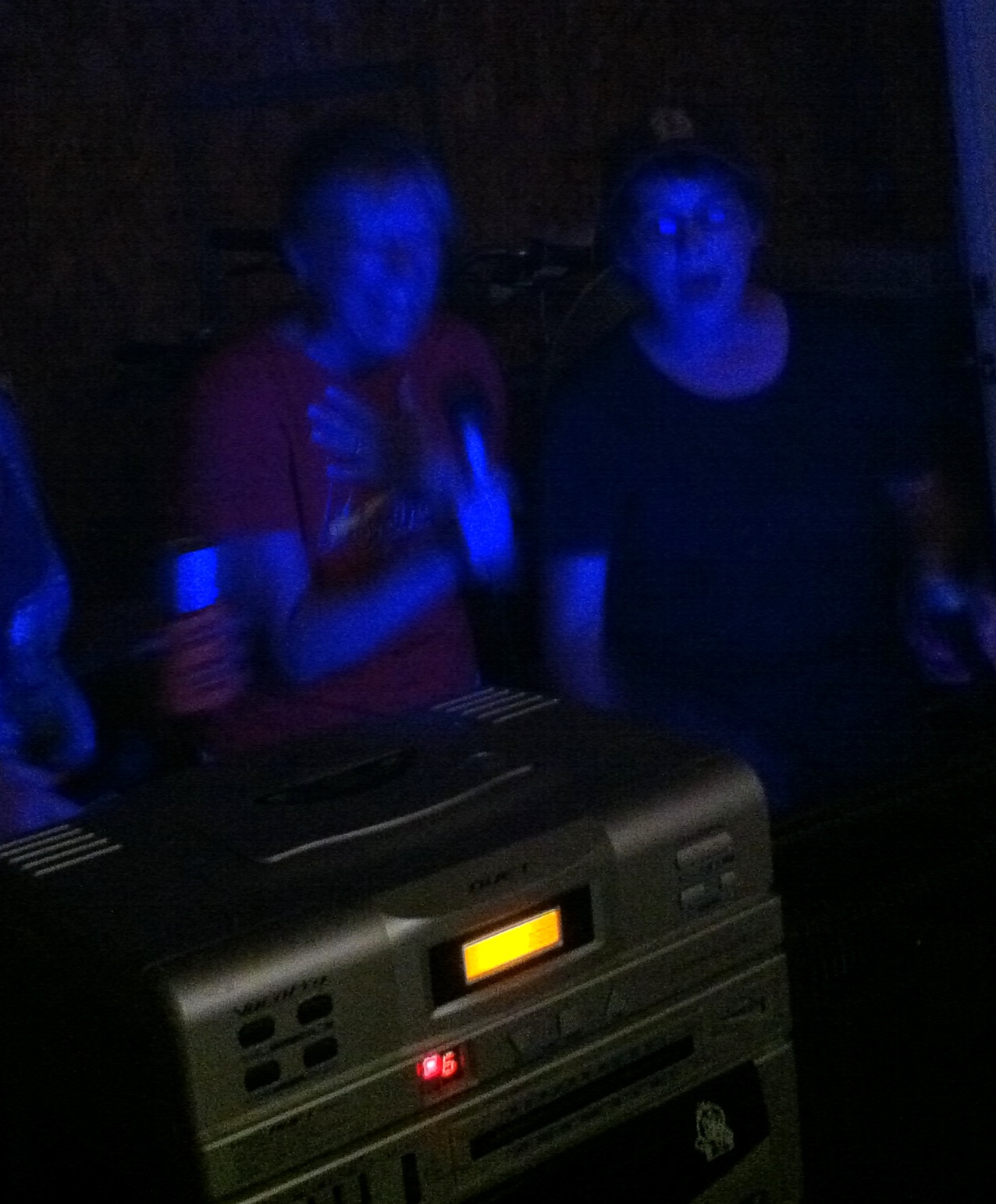
A peculiar thing happens when you set up a karaoke machine at a party. At first, no one wants to approach it. Everyone, whether they have any interest in singing or not, is waiting for the first person to walk up there, pick up the microphone and start singing. No one wants to be that person — and certainly no one wants to be mistaken for that person. If the karaoke machine happens to be set up next to the liquor, then the shy partygoers are forced to either walk over to it with exaggerated nonchalance or simply refrain from getting another drink until someone begins singing. (Or worse, ask someone else to get a drink for them.) Observing this in action at a party this weekend, I began to speculate on how karaoke machines could be used to exploit natural social anxieties. I envision a safe disguised to look like a karaoke machine: those who weren’t frightened by it would likely be too repulsed to go near it. Karaoke machines could be used to hide stains or damage you wouldn’t want people to notice, or to dissuade guests from raiding your refrigerator. I would even guess that a karaoke machine in the bathroom would, if not scare people away completely, would at least instill a vague disquiet. Why is this here? they would wonder, eyeing the machine nervously as they wiped. Are we going to be singing karaoke later? They’d be so freaked out they’d completely forget to snoop in your medicine cabinet.

As for the experience of singing or watching karaoke, I realized this: karaoke is like jet-skiing, in that it is an enjoyable pastime for those actually doing it and a grating annoyance for everyone else. I have jet-skied and thought it was a blast. Yet watching jet-skiers roar across the placid surface of a lake, frightening wildlife and disturbing everyone’s peace, makes me angrily denounce the steady decline of civilization itself.

I have never sang karaoke. It’s bad enough I like jet-skiing.

My Day, Had I Been a Character in a Kung-Fu Movie

9:03

Arrived at office. Changed shoes, stopped at coffee machine and chatted with copywriter about her sons, one of whom is returning to live with her.

9:07

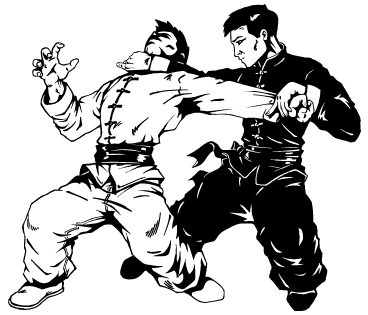
Entered office of Ran Bao-tu, Senior Creative Director and kung-fu master of unmatched skill, nobility and judgment, for morning conference only to find room in shambles and Master Ran lying sprawled on floor, severely beaten and on the brink of death. Cradled master’s head on my knees, imploring: “Who did this?”. Marshaling last ounce of strength, master weakly named Bai Tiao-man, leader of rival kung fu school Cobra Whisper, as his assailant. Master then croaked final breath, dying.

9:08

Swore revenge in the name of my ancestors on Cobra Whisper and its contemptible, craven master, Bai Tiao-man.

9:09

Began catching up on email.

9:19

Sent Outlook meeting request challenging Bai Tiao-man to combat to the death at 5:00 pm. Request was promptly accepted.

9:30

Met with members of Media, Production and PR teams to coordinate efforts on new brand rollout scheduled for next month. Received numerous condolences and expressions of sympathy on death of Master Ran.

10:18

On way to water fountain, chanced upon my counterpart in Marketing at Cobra Whisper, who disgraced Master Ran’s good name with vile falsehoods and insults. Confrontation quickly escalated into combat. Fight ranged throughout Accounting and Human Resources, ending in front of vice president’s office, where I finally bested my opponent with rapid combination of Crane Plucks Eggs from Nest and Swift Tiger Pounce.

10:22

Stood out in lobby alone, silently mourning Master Ran, a single stoic tear streaming down cheek.

Continue reading

The Beatles Meet Cassius Clay, February 1964

There is a tumblr called awesome people hanging out together. It lives up to its name. There are classic photos everyone knows, and quite a few I had no inkling of. It’s cool to see Jimi Hendrix greeting Janis Joplin (I can’t link to the photo itself) backstage — for all I know it’s the first time they ever met. Maybe the only time. Or Michael Jackson pretending to punch Mr. T — as apropos a summary of the early 80s in a single image as you can probably imagine.

One thing I was expecting to find, and did, was this:

There are lots of pictures of the Beatles clowning around with Cassius Clay, as he was still known then, and this one and the variations of it are the best known. It might not occur to you on seeing it that the Beatles and Clay had no idea who each other were. The photo opp was arranged by their respective handlers, who had some inkling of what it might mean to bring these two phenomena together: the British invaders who were taking over American popular music, and the African-American dynamo who, not content to redefine the sport of boxing, went on to create the template for mass-media sports celebrity — he had already started doing it when this shot was taken.

We see this photo now and marvel that it happened, that these five people ever occupied the same space together. It’s like an improbably real version of those cheesy prints that show Bogart, James Dean and Marilyn Monroe hanging out in the same pool hall. The Beatles and Muhammad Ali, to give him his proper name, are titans, figures who stand outside of popular history. It looked a little different to viewers back then. The Beatles were a teenybopper fad in February 1964, when they went to visit Clay as he trained for his first title fight. No one, perhaps not even the Beatles themselves, realized how pivotal their presence would be as the 60s took their strange, epochal course. And Clay was something of a nine-day-wonder himself, a braggart expected to have his clock cleaned by Sonny Liston. Probably a lot of people simply wanted it to happen, wanted to see the loudmouth get his comeuppance, just as a lot of people waited, and waited, for the Beatles to fall on their faces and prove how shallow and fleeting their presence in the culture really was.

But the Beatles went on to prove that rock music could expand beyond anyone’s preconceptions, taking politics, manners and culture along with it. And Ali proved not only that he was a great fighter — indeed, that he was as great as he said he was, which hardly seemed possible — but that a sports figure could be just as culturally radical, just as transformational, as any artist, politician, philosopher or pop musician.

It hadn’t happened yet. No one was seeing it coming. This is a photo of the moment before everything changed.